
The 7 Checks You Should Do Before Your First Ride on a New Online-Bought E-Bike
Quick answer: Before your first real ride on a new online-bought e-bike, check the bolts, brakes, tire pressure, battery seating and charger match, gear shifting, rear light or reflector, and controller connections. Shipping vibration commonly loosens or shifts several of these even on a correctly assembled bike.
If you ordered your e-bike online, it showed up in a box, mostly assembled, with a sheet of instructions and maybe a few Allen keys. Most people unbox it, charge it, and ride off within the hour. That's usually fine, but a handful of issues can sit there unnoticed since day one and get worse the longer they go unchecked.
Here are the seven things worth checking before your first real ride, in the order we'd check them if you rolled it into our shop.
1. Every bolt that holds the bike together
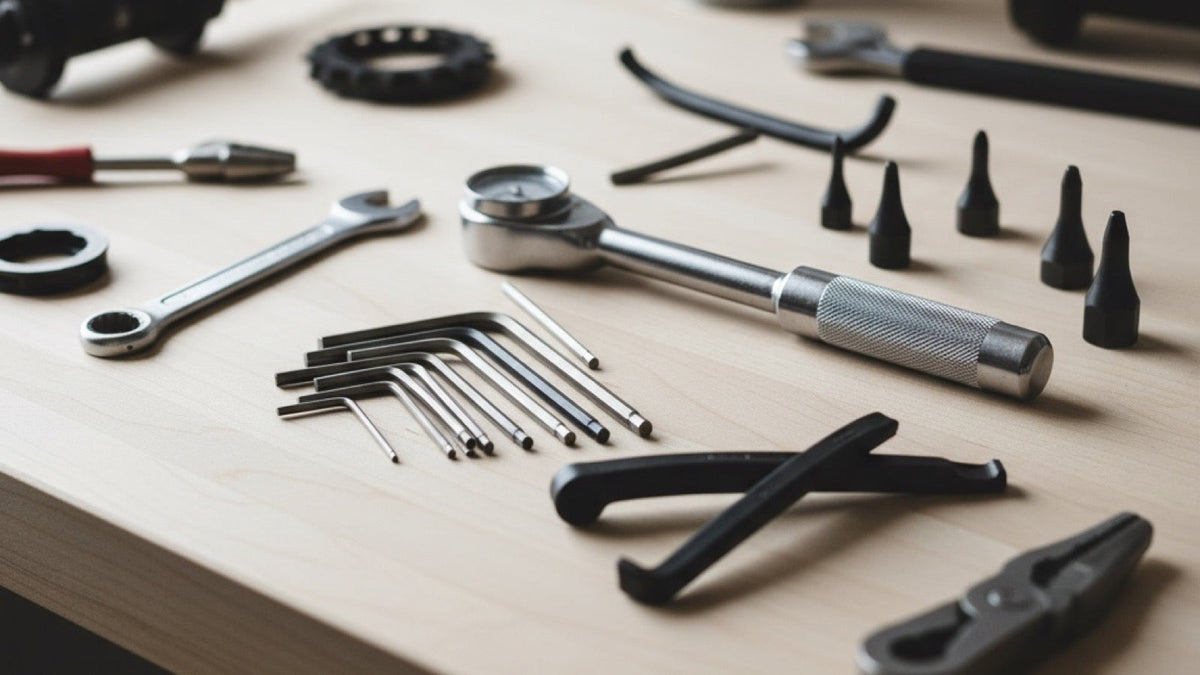
Bikes shipped in a box get jostled. Handlebar stem bolts, seat post clamp, pedal threads, rack mounts, fender stays: all of it can loosen a few turns in transit even if it left the factory correctly torqued. Go over the bike with an Allen key set and snug anything that turns. Pay particular attention to the stem and headset. A loose headset feels like vague, wandering steering at low speed, and it's one of the most common causes of a bike feeling "off" after shipping.
2. Brakes: both the lever feel and the pad clearance
Squeeze each brake lever slowly. It should feel firm well before the lever touches the grip. If it feels spongy or the lever pulls most of the way to the bar, the pads may not be seated or the cable needs adjustment. Spin each wheel and watch the pad clearance: rotors and pads shift slightly in shipping, and a rubbing brake is one of the most common reasons a new e-bike feels sluggish or eats through battery faster than it should.
3. Tire pressure, not just "does it look full"
Fat tire bikes in particular ship soft, and a lot of riders never check the actual number on a gauge. Underinflated tires on a heavier e-bike frame wear faster, feel mushy in corners, and are more prone to pinch flats on Orange County's curb cuts and pothole patches. Check the sidewall for the recommended PSI range and inflate to the number that matches your weight and how you're riding, commuting on pavement wants more pressure than beach cruising on sand.
4. Battery connection and charger match (the one most people skip)
This is the check almost nobody does, and it matters more than any of the others. Pull the battery fully out of its mount, look at the contacts for any bent pins or corrosion from shipping, and reseat it until it clicks or locks firmly. A battery that isn't fully seated can cause intermittent power cutouts that look like a motor problem but aren't. Just as important: confirm the charger that came in the box is actually rated for that battery's voltage and connector type. Under California's SB 1271, which took effect January 1, 2026 and requires e-bikes and their batteries sold in the state to be tested to UL 2849 or EN 15194, using a mismatched or uncertified charger isn't just a warranty problem, it's a real fire risk. If you're not sure your charger matches your battery, that's a five-minute question we're happy to answer in person.
5. Gear shifting and chain tension
Run through every gear while the bike is stationary or on a stand, front to back and back to front. Skipping, hesitating, or a chain that drops when you shift under load usually means the derailleur cable stretched slightly in its first few uses, which is normal, but it needs a barrel adjuster tweak to fix. Riding on a chain that's skipping gears wears the cassette and chain unevenly, which turns a two-minute adjustment into a parts replacement if it's ignored for a few months.
6. Rear light or reflector, and general road-legal status
As of January 1, 2026, California requires a red light or reflector visible on the rear of every e-bike during all hours of operation, not just after dark. A lot of direct-ship bikes come with a reflector sticker that's more decorative than functional, or none at all. Check that yours actually meets the requirement, and if you're riding anywhere near Orange County's paved trails, brush up on the local rules too. We covered the full rundown in our post on California's 2026 e-bike laws and Orange County's trail restrictions.
7. Controller, display, and wiring connections
Turn the bike on and cycle through the display's settings, throttle (if it has one), and pedal assist levels. Look underneath the down tube and around the motor for any connector that looks like it's not fully clicked in, shipping vibration can work these loose. A display that flickers, resets randomly, or throws an error code on a brand new bike is almost always a connection issue, not a dead component, but it's worth catching now instead of after a few hundred miles.
If something doesn't check out
None of this requires special tools or expertise, just ten minutes and some attention before your first ride. But if you go through the list and something still feels wrong, or you'd rather have a shop take a look, bring it in. This matters even more if you bought from a brand that's since had trouble: Rad Power Bikes filed for Chapter 11 bankruptcy in December 2025, and Electric Bike Company liquidated under Chapter 7 in October 2025, which means owners of those bikes can no longer count on the original brand for support. We wrote about that here: e-bike repair in Orange County after Rad Power, Pedego, and EBC. We work on every brand, including bikes bought online, not just what we sell. See our e-bike repair page for details.
We also keep demo bikes on hand for test rides, call ahead to confirm we have the model you want in stock, so if you're shopping for your next one and want to actually feel the difference between a mushy stock brake setup and one that's properly adjusted, book a test ride.
Come by
ATB Bike
13842 Newport Ave #D-1, Tustin, CA 92780
(626) 652-7233
Mon–Sat 10 AM – 6 PM · Sun 12 PM – 6 PM
Stop in with your new bike, no appointment needed, and we'll run through the checklist with you or just answer the one thing you're not sure about. You can also reach us through our contact page if you'd rather ask before you drive over.